

If you are planning to study English in the UK, you have probably noticed that schools offer many different types of courses. General English, intensive, IELTS preparation, business English — the names can feel confusing when you are trying to work out which one is right for you.
This guide explains the nine main types of English courses available at British Council-accredited schools across the UK, with a comparison table to help you decide.
General English
General English courses are the most popular option and suit almost any student. They cover all four skills — reading, writing, listening, and speaking — along with grammar and vocabulary. Most run 15 to 20 hours a week in classes of 10 to 15 students, and you can start at any level from beginner (A1) to advanced (C1). Courses usually run year-round with flexible start dates, and you can study for as few as one week or as long as a year.
Best for: Students who want to improve their overall English for daily life, travel, or as a foundation before moving to a more specialised course.
Intensive English
Intensive English courses follow the same curriculum as General English but pack in more hours — typically 25 to 30 per week. The extra contact time means faster progress, which suits students on shorter stays or those who want to reach a target level quickly. Classes are usually smaller, and some schools add afternoon workshops on pronunciation, conversation, or current affairs.
Best for: Students with limited time who want to make the most progress possible, or those preparing for work or further study.
IELTS Preparation
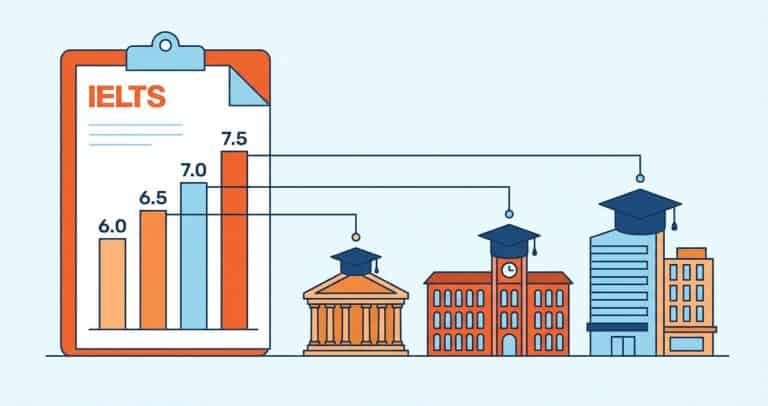
IELTS preparation courses focus specifically on the International English Language Testing System exam, which most UK universities require for admission. Lessons cover all four IELTS papers — listening, reading, writing, and speaking — with exam strategies, timed practice, and regular mock tests. Most schools require at least an intermediate level (B1) to join. Courses typically run 4 to 12 weeks.
Best for: Students who need a specific IELTS band score for university entry, immigration, or professional registration.
Cambridge Exam Preparation
Cambridge exam preparation courses train you for Cambridge English qualifications — usually B2 First (FCE), C1 Advanced (CAE), or C2 Proficiency (CPE). Unlike IELTS, Cambridge certificates do not expire, so they are a good long-term investment. Courses run on fixed schedules aligned with exam dates (usually March, June, and December), lasting 8 to 12 weeks.
Best for: Students who want a lifelong English qualification recognised by employers and universities worldwide.
Business English
Business English courses develop the language skills you need in a professional environment: meetings, presentations, negotiations, emails, and reports. Some courses focus on specific sectors such as finance, marketing, or law. Class sizes tend to be small (6 to 10 students) and the pace is faster, so most schools require at least an intermediate level. Courses range from one-week intensives to longer part-time programmes.
Best for: Working professionals who use English at work, or students preparing for a career in an international company.
Private Tuition
Private tuition gives you one-to-one lessons with a teacher, tailored entirely to your goals. You set the pace, choose the topics, and can focus on whatever you need most — whether that is interview preparation, academic writing, or conversation confidence. Sessions can be booked by the hour or as a weekly package, and scheduling is flexible. Some schools also offer small-group tuition for two or three students.
Best for: Students who want maximum flexibility and personalised attention, or professionals with very specific language needs.
Young Learners
Young learners courses (also called junior programmes) are designed for students aged 8 to 17. They combine English lessons with a full activities programme — sports, arts, day trips, and social events — so students learn inside and outside the classroom. Most run as residential summer programmes with accommodation, meals, and supervision included, though some schools offer year-round options. Class sizes are small and teaching methods are interactive.
Best for: Children and teenagers studying English during school holidays, often with activities and accommodation included.
Academic English
Academic English courses prepare you for study at a UK university or college. They go beyond general language skills to cover academic writing (essays, reports, dissertations), critical thinking, referencing, seminar participation, and lecture comprehension. Some courses include study skills such as note-taking and time management. Entry requirements are usually B1 or B2, and courses run 4 to 24 weeks.
Best for: Students planning to enter a UK university who need to strengthen their academic language and study skills.
English Plus
English Plus courses combine English lessons with another subject or activity — for example, English plus art, music, dance, coding, football, or cookery. They are a good option if you want to develop your English while doing something you enjoy. The English component is usually 15 hours a week, with the “plus” activity in the afternoons or on certain days. Availability varies by school and season.
Best for: Students who want to combine language learning with a hobby or interest, especially during summer.
Which course type is right for you?
The right course depends on three things: your goal, your current level, and how long you can study.
- Need a qualification? Choose IELTS or Cambridge preparation.
- Heading to university? Start with Academic English, then add IELTS if you need a score.
- Short on time? An intensive course or private tuition will get you furthest in a few weeks.
- Using English at work? Business English focuses on professional communication.
- Just want to improve generally? General English is the most flexible starting point.
- Booking for a child or teenager? Young learners programmes include activities and supervision.
- Want something different? English Plus combines language with another interest.
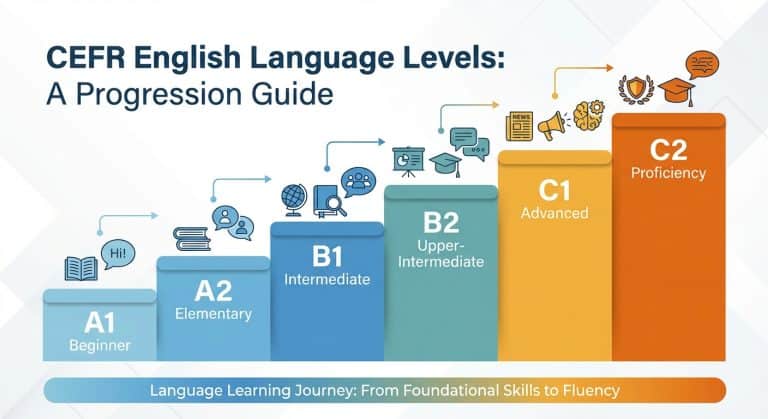
Not sure of your current level? Take our free English level test — it takes about 15 minutes and tells you your CEFR level (A1 to C2), which helps you choose the right course intensity.
Course comparison at a glance
| Course type | Typical hours/week | Usual duration | Entry level | Best for |
|---|---|---|---|---|
| General English | 15–20 | 1–48 weeks | Any (A1–C1) | All-round improvement |
| Intensive English | 25–30 | 1–24 weeks | Any (A1–C1) | Fast progress |
| IELTS Preparation | 15–25 | 4–12 weeks | B1+ | University entry, immigration |
| Cambridge Exam Prep | 20–25 | 8–12 weeks | B2+ | Lifelong qualification |
| Business English | 15–25 | 1–12 weeks | B1+ | Professional communication |
| Private Tuition | Flexible | Flexible | Any | Personalised learning |
| Young Learners | 15–20 | 1–6 weeks | Any (ages 8–17) | Children and teenagers |
| Academic English | 15–25 | 4–24 weeks | B1+ | University preparation |
| English Plus | 15 + activity | 1–8 weeks | Any | Language + hobby |
Ready to find your course?
Use the Course Finder to browse all available courses by type, city, price, and start date. Every school listed on UK Study English is accredited by the British Council, and we show real prices with no hidden fees or commissions.
For more on what courses cost, see our guide: How much does an English course in the UK cost?
Frequently asked questions
What is the difference between General English and Intensive English?
Both follow the same curriculum covering reading, writing, listening, and speaking. The difference is hours: General English is usually 15 to 20 hours a week, while Intensive English is 25 to 30 hours. Intensive courses suit students who want faster progress or have limited time in the UK.
Do I need a specific English level to start a course?
General English, Private Tuition, Young Learners, and English Plus accept students at any level, including complete beginners. Exam preparation courses (IELTS, Cambridge) and Business English usually require at least an intermediate level (B1 or B2). Schools will test your level on the first day and place you in the right class.
Can I change course type after I start?
Most schools allow you to switch between course types if your goals change — for example, moving from General English to IELTS Preparation once your level is high enough. Check with your school about transfer policies and any differences in fees.
Which course should I choose if I want to go to a UK university?
Start with Academic English to develop your essay writing, critical thinking, and seminar skills. If you also need an IELTS score for your university offer, add an IELTS Preparation course afterwards. Many students do Academic English first, then switch to IELTS prep in their final weeks.
Are there English courses for children?
Yes. Young Learners courses are designed for students aged 8 to 17 and include a full activities programme alongside English lessons. Most run during summer but some schools offer year-round junior courses. All young learner programmes include appropriate supervision and safeguarding measures.
What is an English Plus course?
English Plus combines standard English lessons (usually 15 hours a week) with another activity such as art, sport, music, or coding. The “plus” component typically runs in the afternoons. These courses are popular during summer and are a good way to practise English in a real-world context outside the classroom.