

Visa fees, tuition costs, and entry requirements on this page were verified in February 2026. Rules vary by country and may change — check official government sources for the latest.
Why study English in the UK?
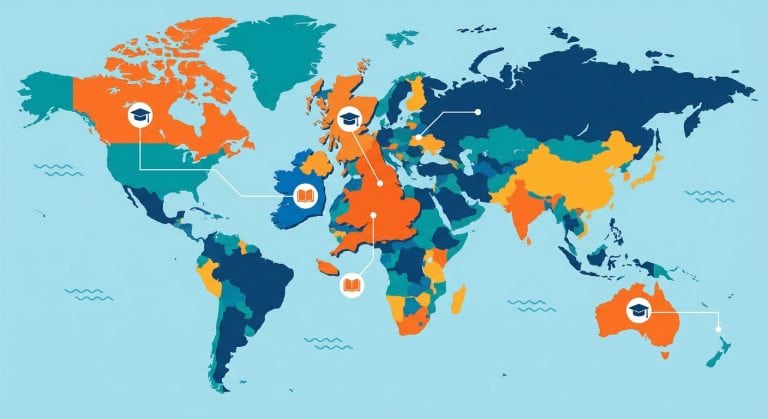
The UK is the world’s original destination for learning English. With over a century of teaching experience, British Council-accredited schools, and the language spoken everywhere you go, it set the benchmark that other countries follow. But it is not the only option. Malta, Ireland, Australia, and Canada all have established English language school industries and attract thousands of international students each year.
So how does the UK compare? In this guide we look at what actually matters: cost, visa requirements, accreditation, work rights, lifestyle, and the English you will learn.
Tuition costs compared
How much you pay for English lessons varies by country, city, and school. Here are typical weekly rates for a standard General English course (around 20 hours per week):
| Country | Weekly Tuition (approx.) | Approx. GBP Equivalent |
|---|---|---|
| UK | GBP 250 to GBP 350 | GBP 250 to GBP 350 |
| Ireland | EUR 250 to EUR 350 | GBP 210 to GBP 295 |
| Canada | CAD 340 to CAD 425 | GBP 195 to GBP 245 |
| Australia | AUD 300 to AUD 500 | GBP 155 to GBP 260 |
| Malta | EUR 180 to EUR 250 | GBP 150 to GBP 210 |
Exchange rates are approximate as of early 2026. Prices vary by school, course intensity, and season.
Malta is the most affordable option for tuition alone. But price is not the full picture. In the UK you are paying for British Council-accredited teaching, full English immersion everywhere you go, the widest choice of schools and locations in any English-speaking country, and access to internationally recognised exam centres. Many students find the quality of teaching and speed of progress in the UK makes it better value overall.
Cost of living
Tuition is only part of the equation. Accommodation, food, transport, and everyday expenses add up quickly. Here is a rough guide to monthly living costs (excluding tuition):
| Country | Monthly Living Costs (approx. GBP) |
|---|---|
| Malta | GBP 670 to GBP 1,010 |
| Canada (outside Toronto/Vancouver) | GBP 685 to GBP 970 |
| UK (outside London) | GBP 900 to GBP 1,400 |
| Australia (Sydney/Melbourne) | GBP 935 to GBP 1,400 |
| Ireland (Dublin) | GBP 1,060 to GBP 1,745 |
| UK (London) | GBP 1,300 to GBP 1,800 |
| Canada (Toronto/Vancouver) | GBP 855 to GBP 1,425 |
Malta is the most affordable overall. The UK, though, offers far more variety. You can study in London for the full big-city experience, or choose a smaller city like Manchester, Brighton, or Edinburgh where costs drop and you still get excellent schools, full English immersion, and easy access to the rest of the country.
For a detailed breakdown of UK living costs, see our Cost of Living Guide for International Students.
Visa requirements
Visa rules matter, especially for students from outside the EU. Here is how each country handles a typical English course of three to six months:
UK
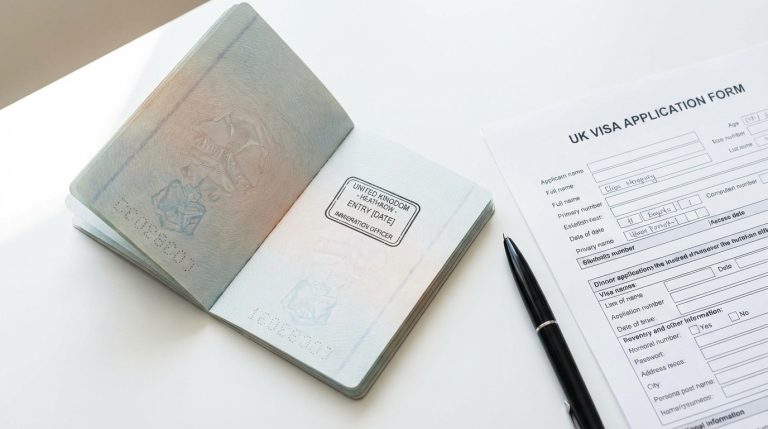
You can study English for up to six months on a Standard Visitor Visa (GBP 127). No sponsor letter or student visa is needed for courses under six months, which makes the UK one of the simplest options for short courses. For longer courses (six to eleven months), a Short-term Study Visa costs GBP 214.
Malta
EU/EEA nationals do not need a visa. Other nationalities can study for up to 90 days on a Schengen visa. Longer stays require a national D-visa and more paperwork.
Ireland
Ireland offers a Stamp 2 visa for courses of 25 weeks or more, which includes work rights (see below). For shorter courses, a study visa is needed for some nationalities.
Australia
You need a Student Visa (Subclass 500) for any course, regardless of length. The application fee is AUD 2,000, and you must meet Genuine Student requirements. This involves more paperwork than most other options.
Canada
Courses under six months can be taken on a visitor visa. Longer courses require a study permit. The process is straightforward but processing times can be slow.
Work rights while studying
This is where the countries differ most:
| Country | Can You Work? | Details |
|---|---|---|
| Ireland | Yes | 20 hours per week during term, 40 hours during holidays (Stamp 2 visa, 25+ week course) |
| Australia | Yes | 48 hours per fortnight during term, unlimited during breaks (Student Visa) |
| UK | No | No work permitted on Standard Visitor Visa or Short-term Study Visa |
| Malta | Limited | Some work rights on D-visa but with restrictions |
| Canada | No | English language students are specifically excluded from off-campus work rights |
If earning money while studying is a priority, Ireland is the strongest option. The UK and Canada do not permit work for English language students. On the other hand, students who focus entirely on their course, without the distraction of a part-time job, consistently make faster progress and get more from their investment in tuition. The UK’s learning environment is built around that full-time focus.
Quality of teaching and accreditation
The UK has the most established and internationally recognised quality system for English language teaching.
The British Council inspects and accredits English language schools in the UK. It is the most widely recognised accreditation body in the world for English teaching. Most international English exams (IELTS, Cambridge) were developed in the UK, and the majority of ELT textbooks use British English.
In Ireland, Quality and Qualifications Ireland (QQI) oversees English language education. Schools must be on the ILEP (Interim List of Eligible Programmes) to accept visa students.
Australia uses a dual system. NEAS provides quality assurance, and CRICOS registration is legally required to teach international students.
In Canada, Languages Canada provides voluntary quality endorsement. Schools must have Designated Learning Institution status to accept study permit students.
Malta’s ELT Council licenses schools. FELTOM is the main industry association with 14 member schools.
All five countries have quality frameworks, but there is a clear hierarchy. British Council accreditation is recognised worldwide and carries the most weight with employers, universities, and immigration authorities. IELTS and Cambridge English, the two most widely accepted English qualifications globally, were developed in the UK and are still administered from here.
The English you will learn
One factor students often overlook is the variety of English spoken in each country.
British English is the standard used in most international textbooks, in IELTS, and in Cambridge exams. Learning in the UK means your skills transfer directly to any professional or academic context. You will also hear a wide range of regional accents, from London to Edinburgh, which builds real-world listening skills that classroom-only learning cannot match.
Irish English (Hiberno-English) has a distinctive accent and some unique vocabulary. English is spoken everywhere, making Ireland a strong immersion environment.
In Malta, instruction follows British English conventions, but Maltese is the main language spoken outside the classroom. This can mean less immersion outside lesson time.
Australian English has a distinctive accent and informal register. It is a fully English-speaking environment with strong immersion, but less familiar to students who have learned British or American English.
Canadian English is closer to American English, with some British spellings. The accent is neutral and widely understood. Bilingual areas (English and French) add variety.
Lifestyle and culture
Studying abroad is not just about the classroom. Here is what each country offers outside of lessons.
The UK has museums with free entry, historic cities, a busy arts and music scene, Premier League football, and easy access to Europe via Eurostar. You can study in a global city like London or a quieter university town like Cambridge or York, all within a compact, well-connected country.
Malta has Mediterranean beaches, sunshine, ancient temples, and a compact island that is easy to explore. Popular with younger students who want sun and socialising alongside their studies.
Ireland has literary heritage, live music, pub culture, and dramatic coastal scenery. Known for its friendly, welcoming culture.
Australia has beaches, wildlife, an outdoor lifestyle, and multicultural cities. Good if you want adventure, but the distance from Europe and the Middle East is significant.
Canada has natural landscapes, safe cities, multiculturalism, and winter sports. Close to the US, but far from Europe and Asia.
Climate and time zones
Two practical factors that students sometimes forget.
Malta and Australia offer the most sunshine. The UK and Ireland have mild but changeable weather; bring a waterproof jacket but expect pleasant summers. Canada has warm summers but very cold winters.
The UK and Ireland (GMT/UTC+0) work well for students from Europe, the Middle East, and Africa, with a manageable gap for South America. Australia suits East and Southeast Asian students. Canada works for the Americas but is difficult for Asian and European students.
Summary: how does the UK compare?
| Factor | UK Strength |
|---|---|
| Teaching quality | British Council accreditation, recognised worldwide |
| English variety | British English, the standard used in international exams and textbooks |
| Visa simplicity (short courses) | Standard Visitor Visa for up to 6 months, no sponsor needed |
| Variety of locations | Global city, seaside town, university city, or Scottish Highlands, all in one small country |
| Cultural experience | Free museums, historic cities, gateway to Europe |
| Time zone | GMT works for the widest range of home countries |
| Work rights | Not available, but many students prefer to focus fully on study |
| Budget | Mid-to-upper range. Study outside London for better value |
Every country has something to offer. Malta wins on budget and sunshine. Ireland is the best option for work rights. Australia and Canada offer adventure and multicultural living. But no other country matches the UK for teaching quality, international recognition, English immersion, and choice. With hundreds of British Council-accredited schools across dozens of cities, you get more options, stronger credentials, and a qualification that employers and universities recognise everywhere.
Ready to see what is available? Browse English courses across the UK and compare schools, prices, and cities, all with real prices shown upfront and no hidden fees.
Frequently asked questions
Is the UK more expensive than other countries for English courses?
UK tuition is at the higher end but comparable to Ireland. Malta is the most affordable for both tuition and living costs. In the UK, studying outside London brings costs down significantly. Cities like Manchester, Bristol, and Edinburgh offer excellent schools at lower prices.
Can I work while studying English in the UK?
No. The UK does not allow work on a Standard Visitor Visa or Short-term Study Visa. If work rights are essential, Ireland offers the best option with up to 20 hours per week during term. Many students find that focusing entirely on study leads to faster progress.
Which country has the best English accent for learning?
This is subjective, but British English (taught in the UK) is the standard used in most international textbooks and exams including IELTS and Cambridge. Learning in the UK means your English will be understood and recognised everywhere.
Is Malta a good alternative to the UK?
Malta is significantly cheaper and has reliable sunshine. English is an official language. However, Maltese is the main language spoken day-to-day, so you may get less English immersion outside the classroom compared to the UK or Ireland.
Do I need a student visa to study English in the UK?
For courses up to six months, you only need a Standard Visitor Visa (GBP 127), no sponsor or student visa required. This makes the UK one of the simplest countries for short English courses. For courses of six to eleven months, a Short-term Study Visa costs GBP 214. See our UK Student Visa Guide for full details.
Which country is best for a short English course of two to four weeks?
The UK and Malta are both strong options for short courses. The UK offers the widest choice of schools, British Council accreditation, and full English immersion. Malta offers lower costs and a Mediterranean climate. Both have simple visa requirements for short stays.