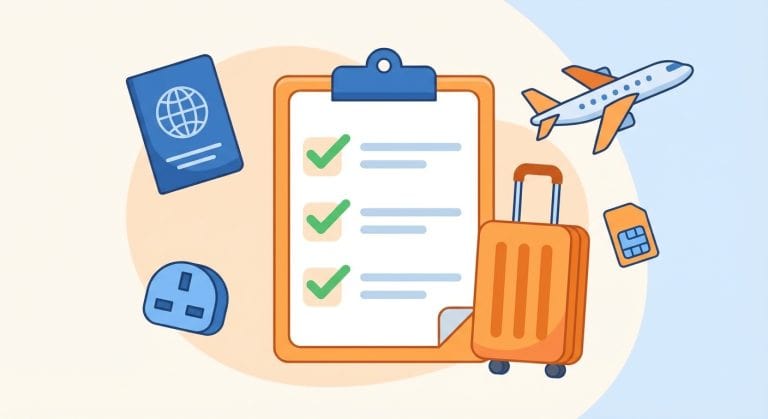


Moving to a new country — even for a few weeks — takes some preparation. This checklist covers everything you need to sort out before arriving in the UK for your English course, from visa paperwork to what to pack. Work through it in order and you will arrive feeling ready rather than stressed.
Fees and requirements on this page were verified in February 2026. Visa costs and NHS rules may change — check GOV.UK for the latest.
1. Sort your visa
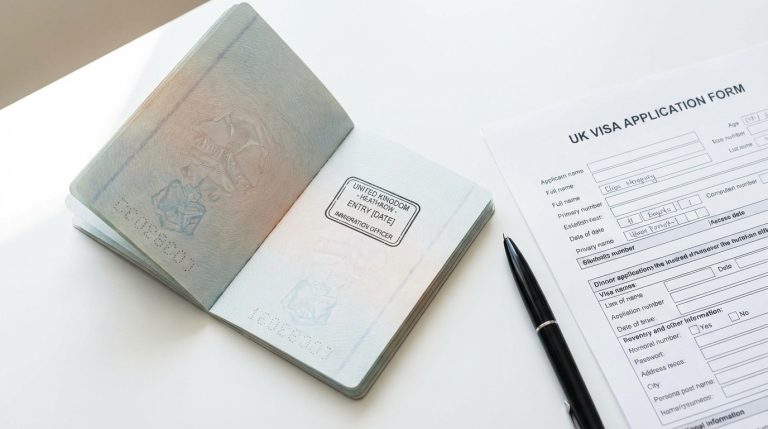
Your first step is checking whether you need a visa. Citizens of EU/EEA countries and several other nationalities (including Japan, South Korea, and Brazil) can study in the UK for up to 6 months without a visa. Everyone else will need either a Short-term Study Visa (for courses up to 6 or 11 months) or a Student Visa (for longer courses at licensed sponsors).
Apply at least 3 to 4 weeks before your planned departure — processing times vary by country. You will need your passport, a letter of acceptance from your school (known as a CAS for Student Visas), proof of funds, and passport-sized photographs.
For full details on visa types, costs, and documents, see our UK student visa guide.
2. Book your accommodation
Most English language schools can help you arrange accommodation, or you can book independently. The main options are:
- Homestay — Live with a local family. Meals are usually included, and you get daily English practice outside the classroom. London Homestays arranges vetted host families across London for English language students.
- Student residence — A private or shared room in purpose-built student accommodation with communal areas. UK Student Residences offers managed accommodation in London designed for international students.
- Private rental — A room in a shared flat or house. This is harder to arrange from abroad and usually requires a minimum lease of 6 to 12 months plus a deposit of several weeks’ rent. Most English language students find homestay or a student residence more practical.
Book as early as you can — popular homestay hosts and residences fill up quickly, especially for summer courses. For more on accommodation costs, see our cost of living guide.
3. Arrange travel insurance
If you are studying on a Standard Visitor entry or a 6-month Short-term Study Visa, you will not have access to free NHS treatment — A&E will assess you but any follow-up care is charged. Students on the 11-month Short-term Study Visa for English language courses pay the Immigration Health Surcharge (currently £776 per year) as part of their visa application, which gives them NHS access. Either way, travel or health insurance covering medical emergencies, hospital stays, and repatriation is strongly recommended. Most policies also cover trip cancellation, lost luggage, and personal liability.
Check whether your home country has a reciprocal healthcare agreement with the UK — some do, but coverage is often limited to emergency treatment only. A 3-month travel insurance policy typically costs £80 to £150.
4. Organise your money
You will need access to money from day one. Here is what to prepare:
- Bring a debit or credit card that works internationally. Visa and Mastercard are accepted everywhere in the UK. Contactless payments are the norm — you rarely need cash.
- Notify your bank that you are travelling to the UK so they do not block your card for suspicious activity.
- Carry some cash for your first day — around £50 to £100 in pounds sterling is enough for transport from the airport and incidentals until you get settled.
- Consider a UK bank account for stays longer than 3 months. Digital banks like Monzo, Starling, and Revolut let you open an account with just your passport and a UK address. This avoids currency conversion fees on everyday spending. Important: if you are staying with a homestay family, you may not use their address to open a bank account or register for services — ask your school for a letter confirming your enrolment address instead.
5. Get a UK SIM card
Having a UK phone number makes everything easier — contacting your school, your host family, and getting around with maps. You have two options:
- Buy on arrival — SIM cards are available at airports, supermarkets, and phone shops. Three, EE, Vodafone, and O2 all offer pay-as-you-go SIMs from around £10 with data included. You just need an unlocked phone.
- Order before you travel — Some providers let you order a SIM online and have it posted to your home address or pick it up on arrival.
A monthly SIM-only plan costs £5 to £15 and includes plenty of data, calls, and texts. Free Wi-Fi is also widely available in cafes, libraries, and most schools.
6. Plan your airport transfer
Work out how you will get from the airport to your accommodation before you land. Options include:
- Airport transfer service — Many schools offer a meet-and-greet transfer for £80 to £150. Your school or accommodation provider can arrange this.
- Train or coach — The cheapest option. The Heathrow Express to central London takes 15 minutes (around £25). National Express coaches serve all major airports from about £8 if booked in advance.
- Tube or bus — The London Underground connects Heathrow to central London for about £5 with an Oyster card. Gatwick is served by the Thameslink train (£10 to £15).
If you are arriving late at night or carrying heavy luggage, a pre-booked transfer or taxi may be worth the extra cost for peace of mind.
7. Gather your documents
Keep these in your hand luggage — do not pack them in a checked bag:
- Passport (valid for the duration of your stay)
- Visa or visa approval letter (if applicable)
- School enrolment confirmation or CAS letter
- Accommodation booking confirmation
- Travel insurance policy documents
- Airport transfer details (if booked)
- Emergency contact numbers (school, accommodation, embassy)
- Proof of funds (bank statement or financial evidence, if required at the border)
Make digital copies of everything and store them in your email or cloud storage as a backup.
8. Pack smart
The UK weather is unpredictable at any time of year. Pack for layers rather than extremes:
- Rain jacket or waterproof coat — essential all year round
- Layers — t-shirts, jumpers, a warm fleece or hoodie. Even in summer, evenings can be cool.
- Comfortable walking shoes — you will walk more than you expect
- UK power adapter — the UK uses Type G plugs (three rectangular pins). Buy an adapter before you travel or at the airport.
- Small umbrella — compact and always useful
- Notebook and pen — for class (some students prefer paper over screens)
Pack light if you can — UK shops have everything you might need, and carrying heavy bags through airports and train stations is no fun.
9. Learn the basics
Before you arrive, it helps to know a few practical things about the UK:
- The UK drives on the left — look right first when crossing the road.
- Tipping is optional. Restaurants sometimes add a 10 to 12.5 percent service charge. You do not need to tip in pubs, cafes, or taxis unless you want to.
- Queuing is taken seriously. Always join the back of the queue.
- “Please” and “thank you” go a long way — British culture values politeness.
- Shops and restaurants close earlier than in many other countries — supermarkets usually close by 10pm, smaller shops by 6pm.
Your first-week checklist
Once you arrive, tick these off in your first few days:
- Register with your school and take the placement test
- Get your student ID card
- Buy a UK SIM card (if you did not order one in advance)
- Get an Oyster card or contactless travel card (in London) or a local bus pass
- Find your nearest supermarket and pharmacy
- Save your school’s emergency contact number in your phone
- Join your school’s social programme — the first-week events are designed to help you settle in and meet other students
Use our Course Finder to browse accredited English courses across the UK with real prices and no booking fees.
Frequently asked questions
How early should I start preparing?
Start at least 6 to 8 weeks before your course begins. Visa applications can take 3 to 4 weeks, and popular accommodation fills up fast. If you need a Short-term Study Visa, begin the application process as soon as you have your school acceptance letter.
Do I need a letter from my school for the visa?
Yes. For a Short-term Study Visa, you need a letter confirming your course enrolment, dates, and fees paid. For a Student Visa, you need a Confirmation of Acceptance for Studies (CAS) from a licensed sponsor institution. Your school will provide this once you have enrolled and paid.
What happens when I arrive at the UK border?
At passport control, you may be asked about your course, where you are staying, and how long you plan to be in the UK. Have your school confirmation letter and accommodation details ready to show. Border officers may also ask to see proof that you can support yourself financially.
Can I use my phone from home in the UK?
Yes, but roaming charges can be expensive. Most international visitors find it cheaper to buy a UK SIM card on arrival. If your phone is locked to your home network, ask your provider to unlock it before you travel.
What if I arrive at the weekend or outside school hours?
Most schools will give you emergency contact details for out-of-hours arrivals. If you are staying in a homestay, you must arrange your arrival time with your host family before you travel — they need to be home to welcome you and show you around. Let your school and accommodation provider know your flight details as early as possible.
Is the UK safe for international students?
The UK is generally very safe for international students. As in any country, use common sense — keep your belongings secure, be aware of your surroundings at night, and save your school’s emergency number in your phone. Your school’s welfare team is there to help with any concerns.