

IELTS score requirements and test fees on this page were verified in February 2026. Universities update their entry requirements each year — check the admissions page for your chosen course for the latest figures.
The short answer
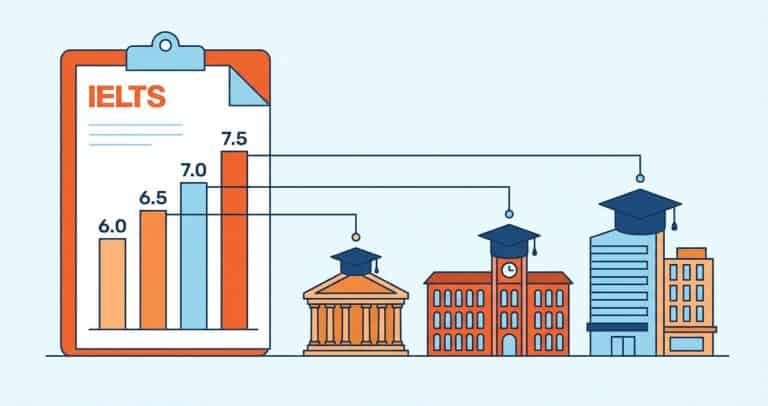
Most UK universities ask for an IELTS Academic score of between 6.0 and 7.5, depending on the course. Competitive programmes like medicine or law sit at the top of that range, while engineering and science courses tend to accept lower scores. Every university sets its own thresholds, and they can differ between departments at the same institution.
The table below gives you a starting point, but always check the specific entry requirements for the course you are applying to.
IELTS Academic, not General Training
There are two versions of the IELTS test. UK universities require IELTS Academic. IELTS General Training, which is designed for immigration and work applications, is not accepted for university entry.
Both tests use the same 1–9 band scale and share identical Listening and Speaking sections. The difference is in Reading and Writing: the Academic version tests your ability to handle university-level texts and write structured essays, while General Training uses more everyday, practical material.
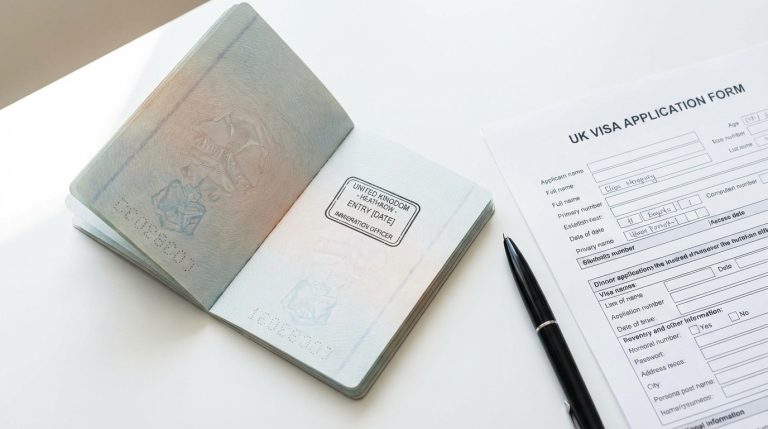
You may also see references to IELTS for UKVI (Academic). This is the same Academic test with the same content and scoring, but taken at a UKVI-approved centre with extra identity checks. Universities accept it in the same way as standard IELTS Academic. If you need a visa to study in the UK, taking the UKVI version means you can use one result for both your university application and your visa.
Typical requirements by subject
| Subject area | Typical overall score | Minimum per component |
|---|---|---|
| Medicine and dentistry | 7.0–7.5 | 6.5–7.0 |
| Law | 7.0–7.5 | 6.5–7.0 |
| Arts and humanities | 6.5–7.5 | 6.0–7.0 |
| Business and management | 6.5–7.0 | 6.0–6.5 |
| Social sciences | 6.5–7.0 | 6.0–6.5 |
| Engineering and science | 6.0–6.5 | 5.5–6.0 |
These ranges cover the majority of UK universities. The most selective institutions (Oxford, Cambridge, LSE) sit at or above the top end.
University-by-university requirements
Here are published requirements from eight well-known UK universities. Use these as a benchmark, not a substitute for checking the actual admissions page.
| University | Lowest requirement | Highest requirement |
|---|---|---|
| University of Oxford | 7.5 overall, 7.0 per skill | 7.5 overall, 7.0 per skill |
| University of Cambridge | 7.5 overall, 7.0 per skill | 7.5 overall, 7.0 per skill |
| UCL | 6.5 overall, 6.0 per skill | 8.0 overall, 8.0 per skill |
| Imperial College London | 6.5 overall, 6.0 per skill | 7.0 overall, 6.5 per skill |
| LSE | 7.0 overall, 7.0 per skill | 7.0 overall, 7.0 per skill |
| King’s College London | 6.5 overall, 6.0 per skill | 7.5 overall, 7.0 per skill |
| University of Manchester | 6.0 overall, 5.5 per skill | 7.5 overall (postgraduate) |
| University of Edinburgh | 6.5 overall, 6.0 per skill | 7.5 overall, 7.0 per skill |
Oxford and Cambridge require 7.5 across all undergraduate courses. UCL uses a five-level system where requirements vary by department — Level 1 (science and engineering) starts at 6.5, while Level 5 (a small number of programmes) asks for 8.0. Manchester has one of the lowest minimum thresholds at 6.0 overall for some undergraduate courses.
What if your score is 0.5 too low?
If your IELTS result is slightly below your university’s requirement, you may not need to retake the whole test. Most UK universities run pre-sessional English courses that bridge the gap. Complete the course successfully and you can progress straight to your degree without sitting IELTS again.
The length of the pre-sessional depends on how far below the requirement you are:
| Gap below requirement | Typical pre-sessional length |
|---|---|
| 0.5 bands | 4–6 weeks |
| 1.0 band | 10–12 weeks |
| 1.5 bands | 15–20 weeks |
University pre-sessional courses typically cost between £3,000 and £6,000, depending on the length and institution. They also give you a head start on academic skills like essay writing, referencing, and seminar participation before your degree begins. For a full breakdown, see our guide to pre-sessional English courses.
Language schools also offer pre-sessional courses that focus on the same academic English skills. These can be a good option if you want to start preparing earlier or prefer a smaller class setting. Browse pre-sessional courses on UK Study English.
How much does the IELTS test cost?
The IELTS Academic test costs £240 in the UK (2026). IELTS for UKVI (Academic) costs more, at around £273.
A newer option is IELTS One Skill Retake (£180), which lets you resit a single component within 60 days of your original test instead of taking the full exam again. Not all universities accept it — Edinburgh, for example, does not — so check before booking.
Your IELTS score is valid for two years from the test date. All component scores must come from a single sitting; universities do not combine results from different test dates.
Preparing for IELTS
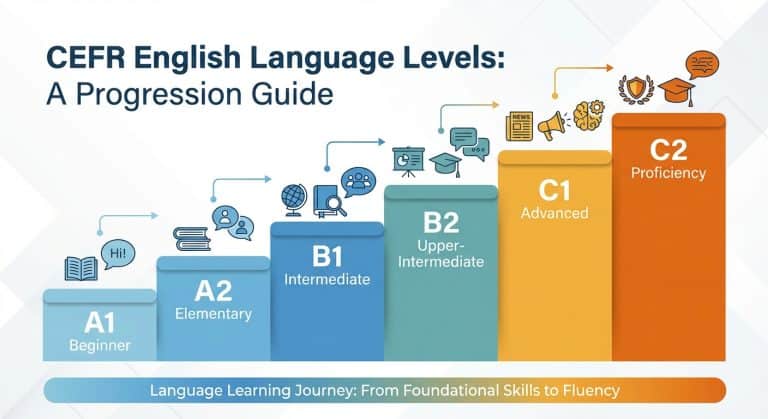
UK Study English lists over 80 IELTS preparation courses across the UK, from short evening classes to intensive full-day programmes. If you are unsure what level you are starting from, try our free English level test to find out where you stand on the A1–C2 scale.
If you need to reach a specific band score for university, an IELTS course at an accredited UK school gives you daily practice with the test format alongside native-speaker immersion that is difficult to replicate from home.
Frequently asked questions
What is the minimum IELTS score for a UK university?
The lowest published requirements are around 6.0 overall with 5.5 in each component, though most courses ask for 6.5 or higher. Medicine, law, and competitive humanities programmes at top universities may require 7.0–7.5.
Do UK universities accept IELTS General Training?
No. UK universities require IELTS Academic. The General Training version is designed for immigration and workplace purposes and is not accepted for degree-level study.
Can I combine scores from two IELTS tests?
No. Universities require all four component scores (Listening, Reading, Writing, Speaking) from a single test sitting. You cannot mix your best scores from different dates.
How long is an IELTS score valid?
Two years from the test date. If your score expires before your course starts, you will need to retake the test.
What happens if I miss my required score by 0.5?
Most universities offer a pre-sessional English course lasting 4–6 weeks that bridges a 0.5 gap. If you complete it successfully, you can join your degree without retaking IELTS. Longer pre-sessional courses are available for larger gaps.
Is IELTS the only English test UK universities accept?
No. Many universities also accept PTE Academic, TOEFL iBT, Cambridge C1 Advanced, and Cambridge C2 Proficiency. Check your university’s admissions page for the full list of accepted tests and their equivalent scores.